«
This is uncompromising and exciting music, simultaneously experimental and classical. //
Das ist kompromisslose, spannende Musik, zur gleichen Zeit experimentell und klassisch.
» Jazznytt, Lasse Haugen, Norwegen, 2010
«
KEROUAC plays a kind of music that opens new sound spaces and takes us outdoors. Impressive! //
KEROUAC spielt eine Musik, die neue Klangräume öffnet und ins Freie
führt. Eindrücklich!
» Manfred Papst, NZZ am Sonntag, 2010
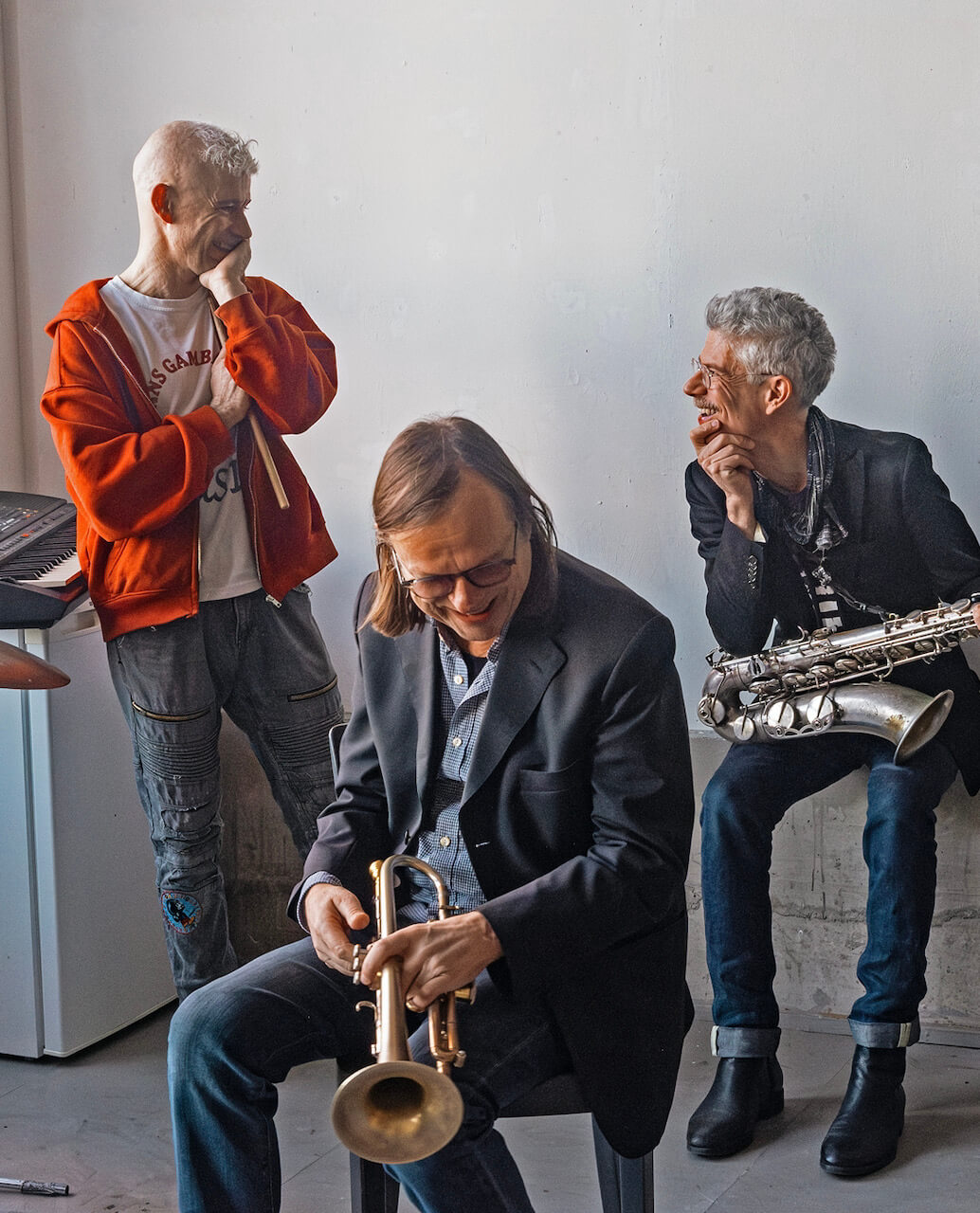
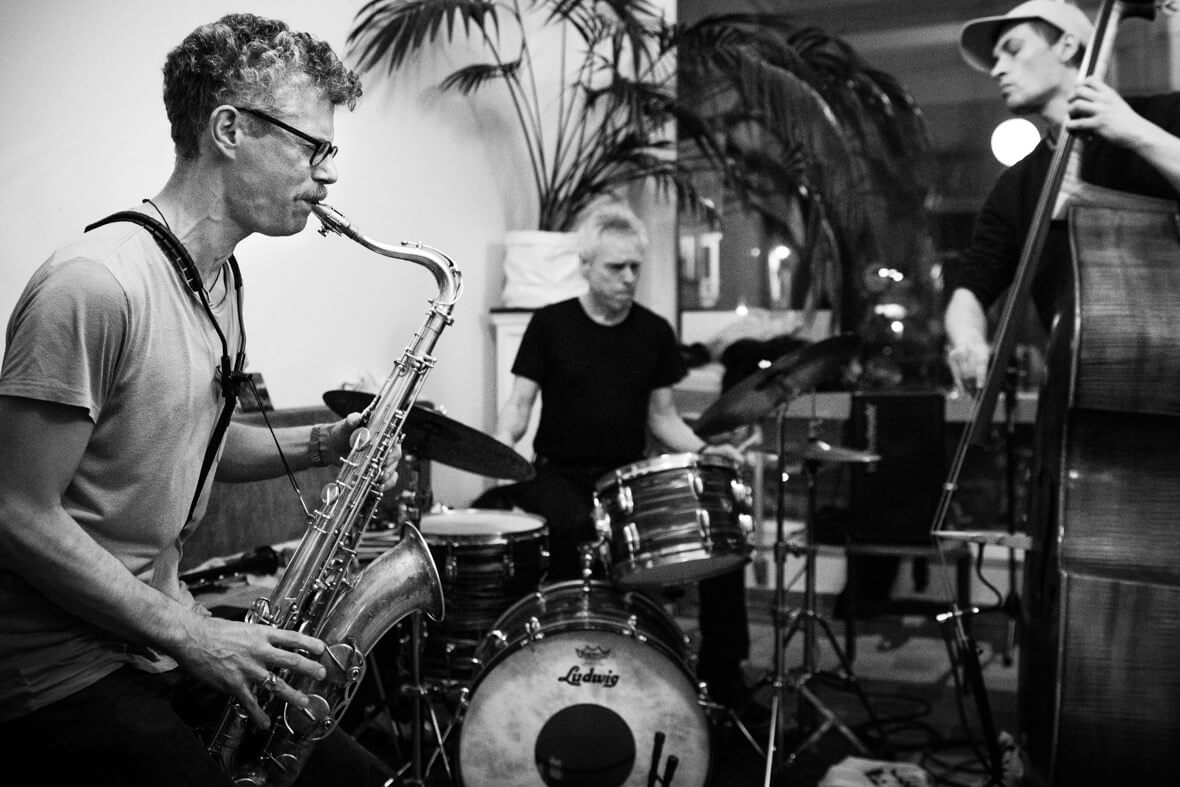
Die Band Michael Jaeger KEROUAC ist die jüngste hervorragende Formation, welche das renommierte Schweizer Label INTAKT Records letztes Jahr in seinem internationalen Katalog präsentierte. Die Working Band um den Züricher Tenorsaxophonisten Michael Jaeger steht für ausgesprochen kreative progressive Jazzmusik aus Europa, für – „the sound of surprise“ (Die Weltwoche, Peter Rüedi). Mit Vincent Membrez (p), Luca Sisera (b), Norbert Pfammatter (dr) und Michael Jaeger (ts, cl) ist KEROUAC mit eigenständigen und bekannten Exponenten der aktuellen Schweizer Jazzlandschaft spektakulär besetzt.
Die zweite Veröffentlichung von Michael Jaeger KEROUAC „Outdoors“ erschien 2010 auf INTAKT Records: Jaeger begeisterte den grossen amerikanischen Blue Note Saxophonisten Greg Osby sowie den traumwandlerischen Schweizer Gitarristen Philipp Schaufelberger für eine Zusammenarbeit und schrieb für das Sextett neue Musik, welche nach ihrer Veröffentlichung national und international begeisterte Rezensionen auslöste. Komplexheit und Einfachheit, Kompromisslosigkeit und Freiheit; Stille und Chaos sind bei KEROUAC keine Gegensätze, sondern bedingen sich gegenseitig.
Immer wieder suchte KEROUAC klangliche und musikalische Ergänzungen und integrierte Musikerpersönlichkeiten verschiedenster Couleur in ihr Kollektiv: So trat KEROUAC mit dem Altsaxophonisten Nat Su etwa am internationalen Unerhoert! Festival 2007 in Zürich auf. 2009 traf KEROUAC in Bern auf die grossen Schweizer Improvisatoren Urs Leimgruber (saxes) und Philipp Schaufelberger (git). Die Zusammenarbeit mit Philipp Schaufelberger in Kombination mit dem New Yorker Saxophonstar Greg Osby wurde 2010 in einer siebentägigen Tournee durch Europa weitergeführt und vertieft.
2006 erscheint mit „Erfindungen“ das Debut der Schweizer Formation KEROUAC beim Label UNIT Records über das der Saxophonist Omri Ziegele schreibt: „Eine schöne Platte. Eine reife Platte. Eine, die aufruft zu Kontemplation und Wagemut, zu Besinnung und zum Sturm auf das Allzustille im Kopf. Wir wünschen weitere Widerspenstigkeiten und eigensinnige Nachdenklichkeit. Die Nacht ist lang – und sie braucht euch!“ Oder die Weltwoche aus dem Jahr 2007 meint: „Im Kern ist die CD das Werk eines fast schon erschreckend abgeklärten jungen Tenorsaxophonisten“. Seither gab KEROAUC unzählige Konzerte, war auf vier internationalen Tourneen erfolgreich durch Europa unterwegs und wurde am ZKB Jazzpreis 2007 für Ihre Musik ausgezeichnet.
«Il nous fut donné d’entendre un vocabulaire de groupe des plus remarquables, batit sur de longs passages d’improvisation collective, plus basés sur un sentiment du nous que du je. Le projet de Jaeger a ceci de captivant qu’il y a toujours, derriére cette musique ostensiblement libre, une conscience trés forte de la structure. » Tages Anzeiger, au sujet du concert au Unerhoert Festival Zurique 2007
«Le quartet délivre, lors d’improvisations collectives,
d’intenses événements musicaux se situant quelque part entre Mulligan et l’éclectique Steve Coleman.
D’une part, un jeu énergique et tendu, mais aussi des moments tranquilles et très appliqués dans une veine
cool-jazz. Un disque séduisant qui donne envie d’en entendre plus, en concert.
» Jazz Thing, février 2007
Rassemblé autour du saxophoniste zurichois Michael Jaeger, Kerouac est un quartet de jazz innovant et original qui
présente une musique improvisée énergique. Une balance entre trois jeunes musiciens – Vincent Membrez au piano et
Luca Sisera à la contrebasse aux côtés de Jaeger – et l’expérience du roc Norbert Pfammatter à la batterie.
Avec son premier disque, Kerouac et sa musique intense ne passe pas inaperçu.
Kerouac fait parti du paysage du jazz zurichois depuis 1999 et se produit depuis le concert d’avril 2005 au
Bazillus Club de Zürich dans la formation actuelle.
On entend des improvisations collectives, mais des improvisations qui restent « dans l’endroit », c’est à
dire non pas des développements linéaires aux éléments musicaux sans cesse renouvelés, mais un matériau de
départ réduit, autour duquel la musique gagne en intensité en le variant, en le cernant, en l’exploitant au
maximum. Ce matériau fut improvisé un jour, puis conservé comme point de départ des morceaux. Jaeger organise,
dans ses compositions, ce matériau sur une ligne de temps, avec l’aide de partitions ; quatre horloges digitales
synchronisées tiennent ensuite lieu de « chef d’orchestre ». Des coupures, des fractures musicales radicales sont
ainsi possible grâce aux horloges.
D’autres compositions de Jaeger se rapprochent plus d’une certaine tradition : se sont des mélodies swing, évoquant
les grands standards du jazz. Le matériau mélodique rappelle celui de l’altiste contemporain Greg Osby ; le matériau
harmonique s’inspire notamment de la vision du saxophoniste Mark Turner avec lequel Jaeger étudia. Les morceaux ne
fonctionnent plus selon une pensée harmonique tonal, c’est au contraire un assemblage de couleurs, juxtaposées et
liées à la logique de la mélodie.
L’amour de la logique dans la musique de Jaeger est le résultat du long travail avec l’altiste zurichois Nat Su,
auprès duquel il étudia pendant dix ans.
Des morceaux minutés, des improvisations libres ou des morceaux originaux, le son de Kerouac – un mélange compact
et homogène entre batterie, contrebasse, piano (préparé) et saxophone ténor – rassemble ce qui s’assemble.
«There was a band language of noticeable consistence heard, which were built during collective stretches with a feeling of We, rather than I. You realize with this ensemble, that behind this freely developing music stands a very strong structural consciousness. » Tagesanzeiger, concerning the concert at the Festival Unerhoert 2007 in Zurich
«The Quartett delivers intensly formulated events
through collective improvisation, which changes somewhere between Gerry Mulligan and the ever evolving Steve Colemann.
One the one hand, through their powerplaying, the brain is blown out of the head. On the other hand,
due to intense concentration, the placid style of Cool-Jazz is cared for. A stimulating album, which
inspires desire for a live show.
» Jazz Thing, February 2007
"Outdoors" – the piece that was namesake to the latest CD of Michael Jaeger,
the group Kerouac and guests Greg Osby and Philipp Schaufelberger was first of all and tritely produced "outdoors".
In Vienna. Jaeger put himself on leave from his job as a music teacher he holds down in Winterthur in order to earn a living.
He doesn't perceive the job to be a drag. It grants him the relative luxury that he does not have to compromise hastily.
Yet he experienced "outdoors" – in Vienna, in New York, in Berlin – a new kind of freedom. That doesn't mean inside to be all the opposite.
It means not only captivity, but also familiarity and comfort. One entails the other.
But liberty is something you have to take (and the Swiss sometimes have a problem doing so). Creative spaces though have to be claimed. "Space" is a very important notion to Michael Jaeger, in many respects. But first of all it means something that is as simple as fundamental. It relates to the situation of the artist in a society that is not necessarily and naturally sympathetic to art. Jaeger is a reserved, sensitive but determined man. He does not attack the real existing circumstances with clenched fists. But he also knows that you don’t get leeway for nothing. He has to fight for it. "We define the spaces that give us the possibilities to move ourselves. If we don’t manage to do this by ourselves, nobody will do it for us. The society does not wait for us ears wide open. There is a public for our music, but it is a minority that takes the time you need essentially for this music."
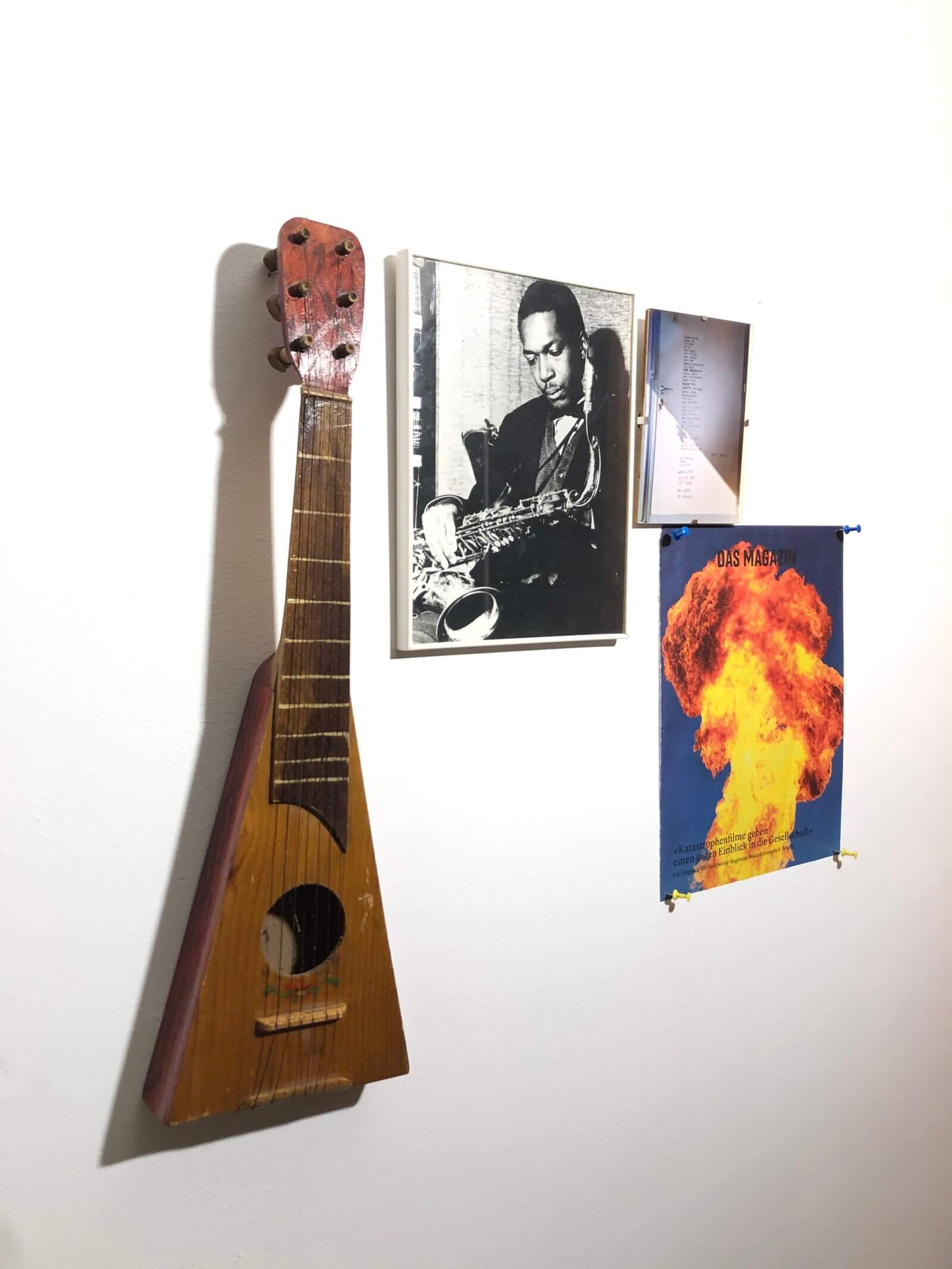
There was a time when jazz was not only a young music but (at least in the special department for intellectuals) also music for the young. Someone born in 1976 has not experienced that. When they got to the age of rebelliousness the potential for protest had vanished even from rock music. When the young clarinetist and saxophonist began to take interest in the music of Dizzy Gillespie and Charlie Parker, then in Coltrane, jazz had very "little revolutionary potential". The "roughness, the absolute" hit him, he perceived what he first merely sensed then recognized as an authentic attitude to life in jazz, he was struck by the translucency of this music more than by any binary rock grooves. With his brother, the drummer Chris Jaeger-Brown, he had improvised already as a child on the bamboo flute, now they soon were permanent residents in the Zurich WIM (Workshop for Improvised Music). There he got to know freer ways of playing than he knew from Dizzy and Santana (whom he also admired). It was pure coincidence that later, looking for a band name, he came across "Kerouac": He found the title of a mostly unknown composition that Dizzy Gillespie had dedicated 1941 to the author, at that time altogether unknown, who after the war would be the icon of the beat generation (On the Road). Mere chance, but in retrospect it does make sense.
It is all about space for Jaeger, in his music too. In the quartet with the pianist Vincent Membrez, the bassist Luca Sisera and the drummer Norbert Pfammatter he keeps looking since 2005 persistently and with more and more success for the labile balance between self-fulfillment and control. Between freedom and structure. Between individualism and the collective. Today Kerouac is on such an advanced level of the collective consciousness (and even more of the col-lective unconscious), that the four can launch each other almost telepathically into creative spaces. More than that: the collective understanding generates such a pull that even new partners or guest are integrated almost on the spot, almost as if they were members of the band for years. Greg Osby, alto saxophonist from St. Louis is a star since the early nineties (as much a star as anyone can be playing jazz), with more than ten own titles at the famous label Blue Note.
Yet Outdoors is definitely not one of these productions where a more or less apocryphal local band basks in the glory of a big name. Osby is not only by reputation one of the leading contemporary alto saxophonists. He himself is a nonconformist and a structured mind, a woodwind player with a clear shape, with derring-do and of radical disposition. Yet again he is no more responsible for the success of this CD than Philipp Schaufelberger on the guitar, who is marvel-ously contained, open-minded and eclectic. Not to mention the regular cast of Kerouac.
They make most inspired improvised or composed music that does not aim to anything but itself, let alone any ideology whatsoever. Their music is even allowed to swing every now and again, it often develops a bewitching melodiousness yet goes audaciously to the borders of the atonal or noise making. In other words: It roots in the centre of "jazz" and at the same time far outside any cliché, thus really happen-ing in the very moment. So this is what Whitney Balliett, the doyen of jazz criticism, used to call this music: "the sound of surprise".
It is not necessarily easy to follow (you’ll have to engage in skating on so thin ice) and even harder to describe. Maybe this will do: Jaeger & Partner struggle less for musical coherence itself, they work to facilitate it. The most important in their structures are the free spaces in between; in and from which those things grow you cannot plan. Which is also the reason for this beautiful reflectiveness in their music. That again is, if you take it as a brooding component, a very Swiss trait (emotions and liberties that settle into the collective meaning they’re always aware of the others rather than just mill-ing along – this sort of collective consciousness that gives to every individual as much freedom as possible is according to Jaeger "a political idea".) But it also has a fundamental side to it. Just as if time and again we’d catch those involved in the process of collective invention how they themselves contemplate surprised what they’ve just come across.
As for the interplay with the two guests, Outdoors has the electric potential of a coup de foudre between partners who meet for the first time and take their chances, without reserve but with acuteness of mind, ceaselessly. The unpredictable, planned judiciously. Now isn’t that the star turn in improvised music? It’s not about shutting down the mind; it’s rather about liquescent thinking.
Peter Rüedi, February, 2010